Homes today are doing more work than they used to. One room is rarely just one thing anymore. A living room becomes an office during the day, a play area in the afternoon, and a place to relax at night. Dining tables turn into desks. Bedrooms double as quiet work zones. This isn’t a design trend. It’s simply how people live now.
Smaller homes, remote work, changing routines, and busy schedules have all pushed spaces to be more flexible. The challenge is making these rooms feel comfortable instead of chaotic. A multi-purpose room should support daily life without constantly reminding you that it’s trying to do too much.
When it works, the room feels natural. When it doesn’t, it feels messy even when everything is technically in place.
Why Multi-Purpose Rooms Are No Longer Optional
Many homes no longer have the luxury of single-use rooms. Extra bedrooms become offices. Living rooms handle everything from meetings to movie nights. Even kitchens now act as social spaces, work zones, and homework corners. Homes today are doing more work than they used to. One room is rarely just one thing anymore. A living room becomes an office during the day, a play area in the afternoon, and a place to relax at night. Dining tables turn into desks. Bedrooms double as quiet work zones. This isn’t a design trend—it’s simply how people live now, which is why factors like sofa set price and versatility matter more than ever when choosing furniture.
This shift isn’t about squeezing more into a space. It’s about making the space work smarter.
Combining functions saves room, but it also saves time. You don’t need to move from one area to another constantly. Everything you need is close by.
Comfort still matters. A room that tries to do too much without planning quickly becomes tiring. The goal isn’t efficiency at the cost of comfort. It’s balance.
A well-designed multi-purpose room supports different activities without making any of them feel temporary or awkward.
Creating Clear Zones Without Building Walls
One of the biggest mistakes people make with multi-use rooms is letting everything blend together. When there’s no visual separation, the room feels confused.
Zones help the brain understand how to use a space. These zones don’t need walls or permanent dividers. Simple visual cues are enough.
Rugs are one of the easiest tools for zoning a space. A rug under a sofa defines a living area, while a sofa cover helps visually anchor the seating arrangement and subtly separates it from the rest of the room. A smaller rug under a desk clearly signals a work zone. Even within one room, these boundaries make different activities feel distinct and intentional.
Lighting also plays a key role in defining purpose. A floor lamp placed near a reading chair creates a calm, focused corner, while a desk lamp instantly marks a work area. Overhead lighting can remain neutral, allowing task lighting and thoughtfully styled elements like cushions and a sofa cover to shape how each zone is experienced.
Furniture placement does a lot of work too. A sofa placed with its back toward a desk subtly divides space. Shelving units or low cabinets can act as separators without blocking light.
The key is flow. Zones should feel connected, not boxed in. Movement between them should feel easy and natural.
Furniture That Adapts Instead of Dominates
In multi-purpose rooms, furniture needs to earn its place. Bulky, single-use pieces often cause problems.
Convertible furniture makes daily transitions easier. Sofa bed allow guests without sacrificing seating. Foldable desks disappear when work hours end. Extendable tables adapt to different needs without taking up constant space.
Modular furniture is especially useful. Pieces that can be rearranged allow the room to change with the day. Lightweight designs make this even easier.
Furniture that’s hard to move limits flexibility. Heavy items lock the room into one setup, which defeats the purpose of a multi-use space.
Ease matters. If transforming the room takes too much effort, it won’t happen regularly. The best designs support quick shifts without frustration.
Storage That Keeps the Room Calm
Clutter is the enemy of multi-purpose rooms. When items for different activities mix together, the space feels busy and overwhelming.
Smart storage solves this quietly.
Hidden storage works well because it doesn’t interrupt the look of the room. Storage inside ottomans, benches, and beds keeps items close without being visible.
Built-in storage reduces the need for extra furniture. Shelves, cabinets, and drawers that are part of the structure keep floors clear and sightlines open.
Vertical storage helps too. Using wall space instead of floor space keeps the room feeling larger.
Accessibility matters. Storage should be easy to reach and easy to put things back into. If it’s complicated, clutter returns quickly.
The goal isn’t to hide everything. It’s to give each activity a place to land when it’s not in use.
Using Lighting to Shift the Mood of the Room
Lighting is one of the most effective tools in multi-purpose spaces, yet it’s often overlooked.
Different activities need different types of light. Work needs focused lighting. Relaxation needs softer light. Entertainment often needs flexible lighting.
Layered lighting makes this possible. A combination of overhead lighting, task lighting, and ambient lighting allows the room to change mood without rearranging furniture.
Desk lamps support focus during work hours. Floor lamps soften the space in the evening. Small accent lights add warmth when the room shifts into relaxation mode.
Adjustable lighting helps even more. Dimmers allow brightness to change with activity. Movable lamps allow light to follow where it’s needed.
Lighting should feel intentional, not random. When lighting supports the room’s purpose at different times, the space feels more comfortable and controlled.
Keeping the Look Unified Across Different Uses
One of the biggest challenges in multi-purpose rooms is visual overload. When every function brings its own style, the room starts to feel chaotic.
A consistent colour palette helps keep things grounded. Neutral bases work well because they adapt easily. Accent colours can appear in smaller ways without taking over.
Materials should also feel related. Mixing too many finishes or textures can make the space feel disjointed. Repeating materials across furniture and decor creates cohesion.
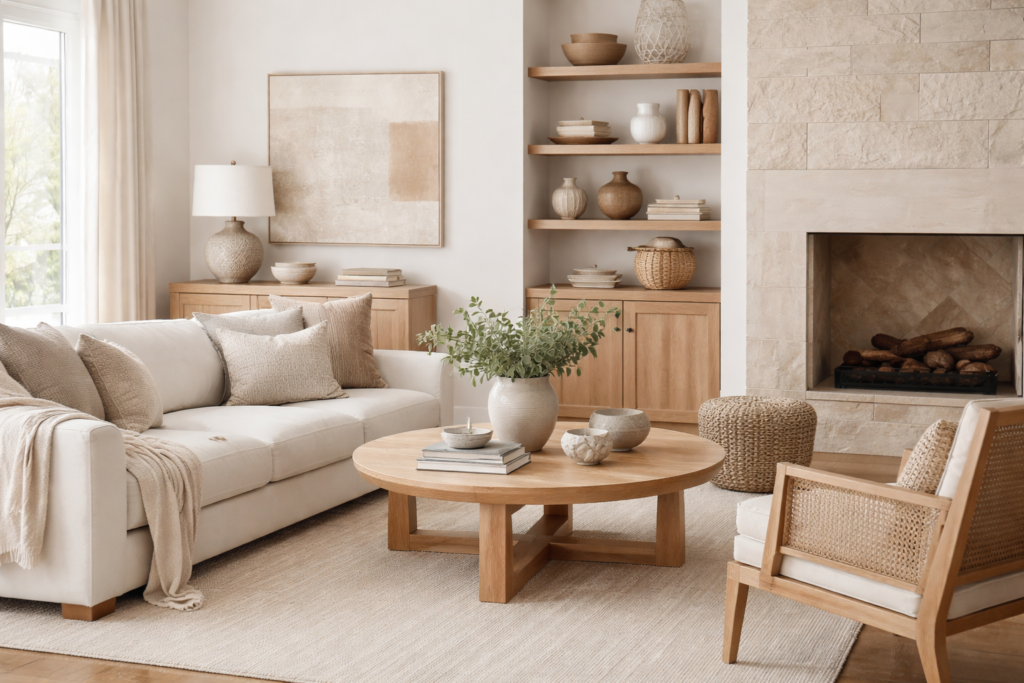
Décor should be simple and flexible. Items that only suit one use can feel out of place when the room changes function.
Visual harmony doesn’t mean everything matches perfectly. It means nothing feels accidental.
When the room looks calm, it’s easier to shift how it’s used without mental strain.
Letting the Room Evolve Naturally
Multi-purpose rooms rarely work perfectly from day one. Living in the space reveals what feels awkward and what feels natural.
Furniture may need to move. Zones may need adjusting. Storage might need improvement.
This is normal.
The best multi-use rooms evolve slowly. They respond to habits instead of forcing new ones.
Flexibility should remain built in. As routines change, the room should be able to change with them.
Final Thoughts
Designing a multi-purpose room isn’t about fitting everything in. It’s about creating clarity within shared space.
Clear zones, flexible furniture, thoughtful storage, and adaptable lighting allow one room to support many needs without feeling overloaded.
When done well, a multi-purpose room feels effortless. It shifts with the day and settles again when needed.
And in modern living, that quiet adaptability is what makes a home truly work.