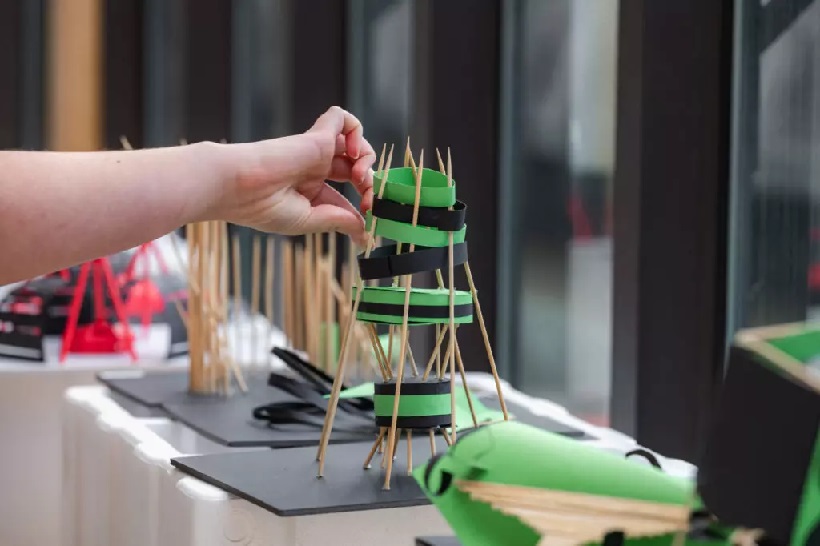
Engineering education in India has long been a gateway to innovation, career growth, and global opportunities. As the country continues to position itself as a hub for technology and industry, engineering colleges are evolving beyond traditional classroom instruction. They now emphasize research-driven learning, real-world problem solving, and fostering entrepreneurial mindsets. Students today are not just learning concepts—they are turning ideas into actionable solutions that can have a tangible impact on society and industry.
What sets modern engineering institutions apart is their ability to combine rigorous academics with hands-on exposure. By integrating practical training, collaborative projects, and international partnerships, these colleges ensure that students are equipped with both technical expertise and the ability to adapt to dynamic, multicultural work environments. Aspiring engineers can now access programs that not only impart knowledge but also nurture creativity, innovation, and leadership.
Exploring Jaypee Institute of Information Technology’s Approach to Innovation and Learning
Jaypee Institute of Information Technology (JIIT) engineering programs exemplify how premier institutions are nurturing future-ready professionals. While widely recognized for its comprehensive academic framework, JIIT technology courses have embraced modern pedagogies that emphasize project-based learning, research-driven initiatives, and interdisciplinary collaboration.
The institute has implemented student-centered initiatives that promote skill development, innovation labs, and industry partnerships. Internships, collaborative projects with local and national organizations, and participation in technical workshops give learners practical exposure, ensuring their ideas are not just theoretical but also implementable.
Gauhati University: Bridging Theory and Real-World Engineering
Gauhati University’s engineering programs, including the Gauhati University School of Technology, illustrate how institutions in northeastern India are contributing to national innovation goals. By fostering strong industry linkages and research collaborations, the university allows students to apply theoretical knowledge to solve complex engineering problems. Its curriculum emphasizes multidisciplinary learning, encouraging students to explore emerging fields such as renewable energy, artificial intelligence, and environmental engineering.
The university also supports innovation through dedicated labs, innovation centers, and mentorship programs, ensuring that students’ ideas can transition from concept to implementation. By combining academic guidance with exposure to practical challenges, Gauhati University exemplifies the modern engineering approach: education that prepares students not only for technical competence but also for societal impact.
Other South Indian Universities Leading the Global Education Wave
South India continues to be a hub for engineering excellence, combining technical rigor with global exposure. The following universities are shaping globally competitive engineers while maintaining affordability and academic quality:
Amrita Vishwa Vidyapeetham (Amrita University)
Amrita University emphasizes a research-oriented approach that blends technology with social innovation. Its engineering programs encourage students to participate in international projects, conferences, and exchange programs. With state-of-the-art laboratories and innovation hubs, students can work on cutting-edge technologies like robotics, AI, and sustainable engineering solutions. The university also fosters entrepreneurship through incubation centers, guiding students to transform ideas into real-world applications. Collaboration with global universities ensures cross-cultural learning and exposure to diverse methodologies.
Koneru Lakshmaiah Education Foundation (KL University)
KL University has emerged as a prominent center for practical and research-driven engineering education. Students engage in industry projects and internships that simulate real-world engineering challenges.Its international collaborations provide students opportunities to participate in exchange programs and joint research, enhancing their global perspective. The campus culture promotes innovation, leadership, and teamwork through competitions, workshops, and technical festivals.
SASTRA Deemed University
SASTRA University focuses on combining technical knowledge with hands-on innovation. The engineering programs emphasize experiential learning, ensuring students gain practical problem-solving skills. Participation in research initiatives, national and international competitions, and collaborative projects prepares students for real-world industry challenges.
Strong industry linkages and mentorship programs encourage students to develop prototypes, explore entrepreneurial ventures, and contribute to technological advancements. The university also prioritizes global exposure through student exchange programs and collaborative research.
Amal Jyothi College of Engineering (AJCE)
AJCE provides a vibrant learning environment that combines academic rigor with practical experience. The college emphasizes multidisciplinary projects and encourages students to participate in research competitions and technical exhibitions.
With partnerships with international universities, students gain access to global research collaborations and dual-degree opportunities. The campus promotes holistic development, including leadership, teamwork, and communication skills.
Transforming Learning Through Experiential Education
Across India, leading engineering colleges are redefining education through experiential learning models. Institutions are integrating real-world projects, internships, and collaborative research as core components of their programs. This approach allows students to understand the complexities of modern engineering challenges, ranging from urban infrastructure to emerging technologies like robotics and the Internet of Things.
Universities are also adopting global collaboration initiatives, partnering with foreign institutions for student exchange programs and joint research. Exposure to international perspectives helps students develop cross-cultural competencies, preparing them for careers in multinational corporations, global research centers, or entrepreneurial ventures.
The Role of Industry Partnerships
Engineering education’s relevance is significantly enhanced through strong industry linkages. Colleges partner with multinational companies, research institutions, and government agencies to provide students with internships, live projects, and exposure to industry-standard practices. These experiences allow students to work on cross-border engineering challenges, understand market needs, and develop solutions that are ready for deployment.
Such integration ensures that graduates are workforce-ready from day one. They gain insights into professional workflows, collaboration across teams, and problem-solving in real-world contexts. The exposure to industries also helps students understand emerging trends, ensuring that their ideas remain innovative and applicable to current global challenges.
Cultivating Holistic Growth and Global Perspectives
Modern engineering colleges understand that technical skills alone are not sufficient. Students benefit from multicultural campus environments, collaborative learning opportunities, and extracurricular programs that develop leadership, communication, and critical thinking skills. Participation in cultural festivals, technical clubs, and intercollegiate competitions enhances peer-to-peer learning, creativity, and empathy.
Additionally, global exposure—through exchange programs, guest lectures by international faculty, and virtual collaborations—prepares students for careers that span borders. By learning to navigate diverse perspectives, students gain the ability to work in multicultural teams, manage global projects, and innovate in varied contexts.
Conclusion
The engineering landscape in India is evolving rapidly, with colleges playing a pivotal role in transforming ideas into impactful solutions. Through research, innovation, experiential learning, and industry collaboration, these institutions equip students with both technical expertise and practical problem-solving skills. By fostering creativity, multicultural awareness, and leadership, engineering colleges are preparing graduates who can meet national and global challenges with confidence.
As education continues to adapt to the demands of a connected world, India’s engineering institutions are demonstrating how learning can transcend traditional boundaries. They are not only imparting knowledge but also inspiring students to turn their ideas into real-world impact, shaping the future of technology, industry, and society.


